ORIGIN OF THE INSTITUTION
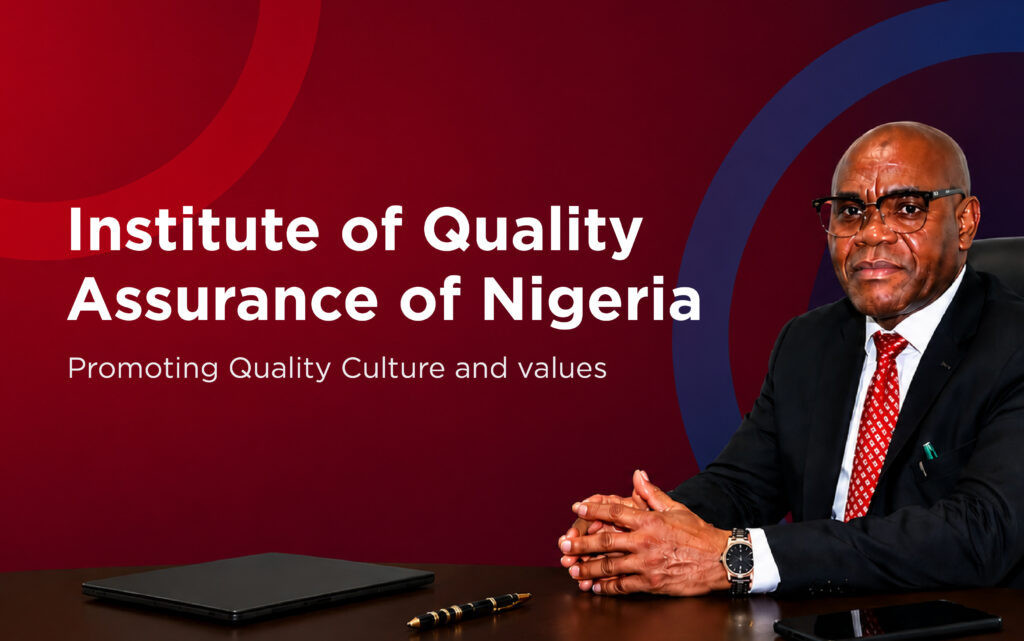
The Institute of Quality Assurance of Nigeria (IQAN) was established in 2004 as the first professional quality institute in Nigeria and is registered as an organization limited by guarantee. IQAN serves as a membership, verification, certification, training, and research institution dedicated to promoting a culture of quality in Nigeria, Africa, and the wider global community. The Institute works to strengthen standards, enhance professional competence, foster leadership, and bridge the gap between quality principles and industry practice through education, partnerships, advocacy, and international collaboration.
Motto:
“Promoting Quality Culture and Values.”
BRIEF DESCRIPTION OF THE INSTITUTE
The Institute of Quality Assurance of Nigeria (IQAN) is committed to promoting quality culture and values across all sectors of society. Its mission is to pursue excellence in training, education, verification, certification, research, and the protection of quality values in every sphere of life. IQAN collaborates with leading national and international organizations, including the Chartered Quality Institute (United Kingdom), the International Association for Quality Assurance in Pre-tertiary and Higher Education (QAHE), the Standards Organisation of Nigeria (SON), NAFDAC, and other strategic partners.
Key activities and achievements include:
IQAN’s vision is to transform attitudes toward quality culture in personal and business life, fostering healthy living, prosperity, excellence, and sustainable development. Its guiding philosophy is that quality is a right to be enjoyed by all people and not a privilege compromised by poor products, services, or governance.
NUMBER OF STUDENTS
Approximate Number of Students and Trainees: 70+, with enrollment and membership continuing to expand through our professional development programmes.
OFFICIAL TRAVEL NOTE
The Institute of Quality Assurance of Nigeria (IQAN) warmly welcomes academic,
professional, and institutional visits from international partners, scholars, researchers, and quality practitioners. The Institute actively supports participation in conferences, technical exchanges, training programmes, research collaborations, and strategic engagements that advance quality culture, innovation, and sustainable development. IQAN remains committed to fostering global partnerships and facilitating meaningful interactions that promote excellence in education, industry, governance, and professional practice across Nigeria, Africa, and the international community.
CONTACT INFORMATION
Institute of Quality Assurance of Nigeria (IQAN)
Ogun House, 2nd Floor,
74 Ralph Shodeinde Street,
Central Business District, Abuja, Nigeria.
Website: www.iqan.icu
Email: [email protected]

This contributor is a recognized member of the IACU global expert network, sharing research-backed pedagogical models and vocational frameworks.